
ALL COUNSELLING SESSIONS ARE CURRENTLY BEING HELD ONLINE ON A TEMPORARY BASIS.
Existing Members Sign In Here >
The Complete Guide to Mental Health First Aid in the Workplace
By Amanda Lambros
Therapist, Speaker,
Trainer, Author
Hi... I'm Amanda
I'm super excited that you are taking the time to get to know me.
If someone collapsed in your office with a suspected heart attack, most workplaces would know exactly what to do. Someone would call an ambulance. Someone else would grab the defibrillator. Someone would start CPR.
Now picture a colleague quietly falling apart at their desk for weeks. Withdrawn, exhausted, snapping at small things, barely holding on.
Most workplaces would not know what to do at all.
That gap is exactly what Mental Health First Aid closes. This guide explains what it is, why it matters, what the evidence says, and a practical action plan you can start using with your team today.
You do not need to be a psychologist to help someone. You need to know what to say, what to notice, and when to step in.
What Is Mental Health First Aid?
Mental Health First Aid is the help offered to a person experiencing a mental health problem or crisis, before professional help arrives or until the crisis resolves.
It works the same way physical first aid does. You are not diagnosing. You are not treating. You are stabilising, supporting and connecting the person to appropriate help.
A workplace Mental Health First Aider is someone trained to recognise the signs that a colleague may be struggling, start a supportive conversation, and guide that person towards the right professional or personal support.
This matters because most people spend more waking hours at work than almost anywhere else. Colleagues are often the first to notice a change, long before a GP, a manager or a family member does.
Mental Health First Aid does not replace clinical care. It is the bridge that gets someone to clinical care sooner, and makes the wait less lonely.
Why Mental Health First Aid Matters More Than People Realise
The scale of this issue is bigger than most workplaces acknowledge.
Almost one in five Australians experience a mental illness in any given year. That is not a small, occasional issue tucked away in one department. That is several people in almost every team, every week.
The financial cost is significant too. Australia's Productivity Commission estimated the total cost of mental ill health to the economy at around $220 billion a year (Productivity Commission, Mental Health Inquiry Report, pc.gov.au/inquiries/completed/mental-health). Within that figure, lost productivity and reduced workplace participation cost businesses between $12.2 billion and $39.9 billion annually, and absenteeism linked to mental ill health costs a further $10 billion a year, from an average of 10 to 12 additional sick days per affected employee.
The upside is just as significant. The same Productivity Commission inquiry found that workplace mental health interventions return between $1.30 and $4 for every dollar invested.
This is not just a compliance issue or a wellbeing add-on. It is one of the more measurable returns on investment available to any organisation.
The Workplace Silence Paradox
Here is what makes this so hard to fix. Australians are talking about mental health more openly than ever, in the media, in schools, at dinner tables.
Workplaces have not caught up.
Diversity Council Australia's Inclusion@Work Index found that more than half of Australian workers would hide a mental or physical health condition to avoid discrimination at work, and 42 percent of workers experiencing poor mental health did not discuss it with anyone at work in the past year.
This is the workplace silence paradox. The place where people spend most of their waking life is often the place they feel least able to say "I'm not okay."
People are not staying silent because they do not trust their colleagues as humans. They are staying silent because they are protecting their career, their reputation and their sense of being seen as capable.
Mental Health First Aid does not fix stigma by itself. It gives people the skills, the language and the confidence to make silence a little less necessary.
How Our Understanding of Workplace Mental Health Has Evolved
For a long time, the unspoken workplace rule was simple: leave your personal life at the door. Mental health was treated as something to manage privately, outside work hours, ideally invisible.
That approach has not aged well, and it is no longer just a cultural preference. It is a legal one.
Safe Work Australia's Model Code of Practice: Managing Psychosocial Hazards at Work, finalised in 2022, now requires employers to identify and manage psychosocial hazards, the workplace factors that can cause psychological harm, with the same seriousness as physical safety hazards (Safe Work Australia, safeworkaustralia.gov.au/doc/model-code-practice-managing-psychosocial-hazards-work).
In other words, mental health at work is no longer framed as a personal issue employees quietly manage alone. It is a shared responsibility, and in many jurisdictions, a legal one.
Mental Health First Aid sits at the practical, human end of that shift. Policies create the obligation. Trained people create the culture.

The Biggest Challenges Workplaces Face With Mental Health

1. Stigma and Silence
Even in workplaces with genuinely good intentions, stigma keeps people quiet. Employees fear being seen as unreliable, overly sensitive or not up to the job.

2. The Manager Confidence Gap
Most managers are promoted for their technical or leadership skill, not their mental health literacy. Many worry about saying the wrong thing, so they say nothing at all.

3. Treating Training as a One-Off Event
A single lunchtime session does not build a mentally healthy workplace. Without practice, follow-up and visible support from leadership, the skills fade and the culture does not shift.

4. No Clear Pathway After Disclosure
An employee finds the courage to say something is wrong. Then what? Many workplaces have no clear next step, which leaves both the employee and the person they told stuck.

5. Compliance Without Culture
Some organisations tick the legal box, a policy here, a poster there, without genuinely changing how people are treated day to day. Compliance protects the organisation. Culture protects the person.
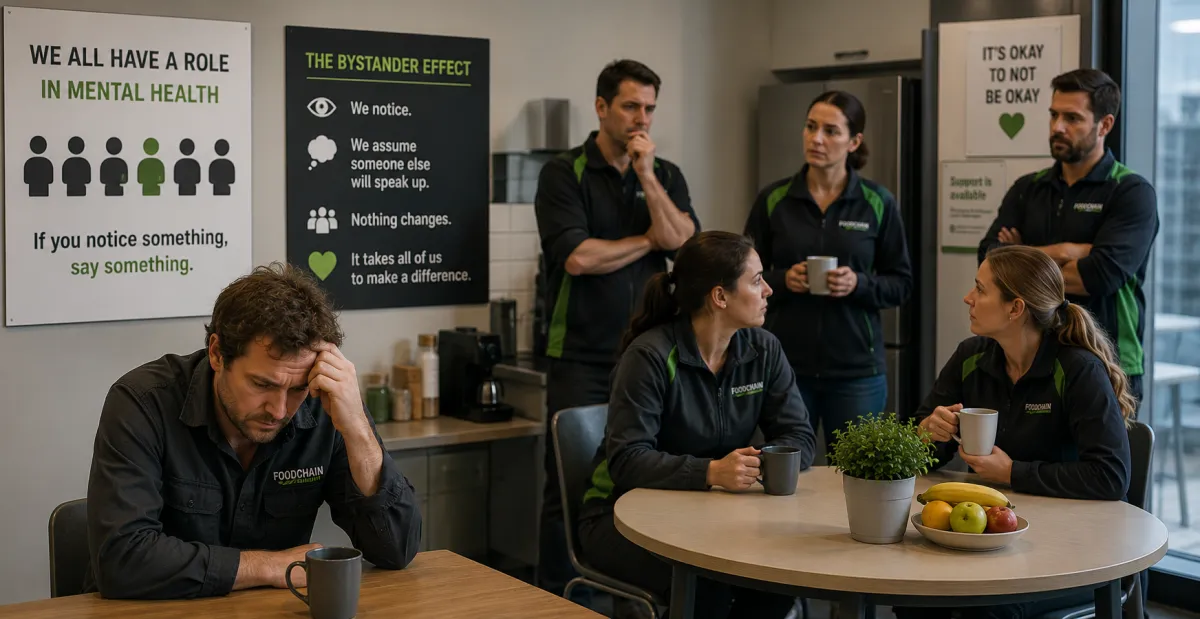
6. The Bystander Effect
Colleagues often notice something is wrong long before anyone acts. Everyone assumes someone else, usually the manager, will handle it.
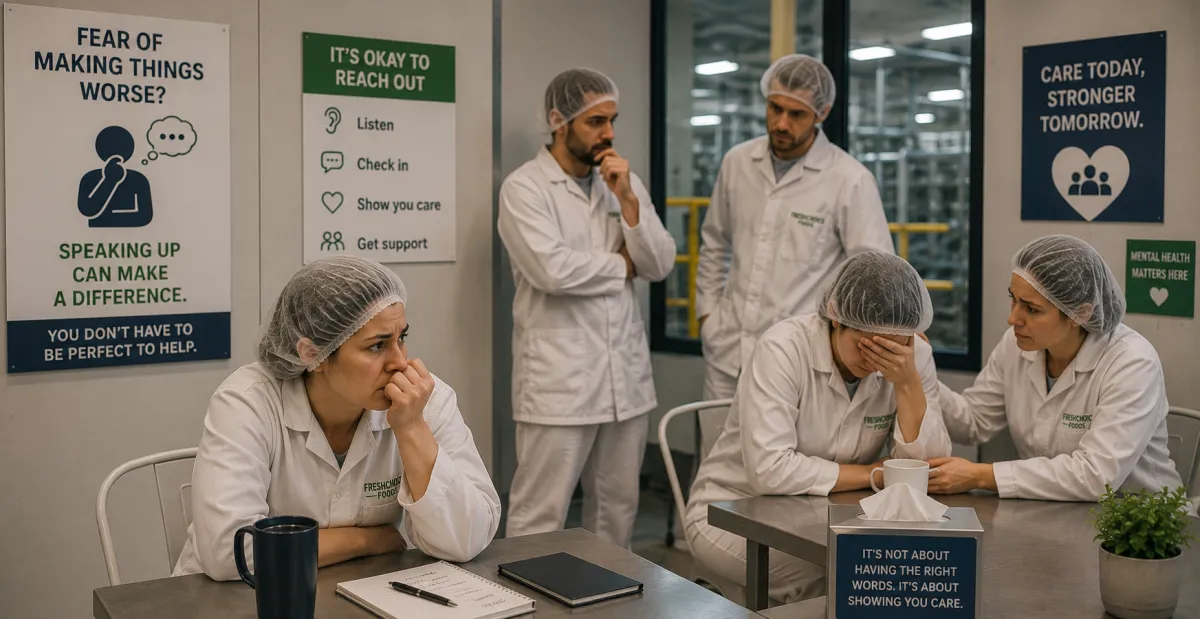
7. Fear of Making Things Worse
Many people avoid stepping in because they are terrified of saying the wrong thing during a genuine crisis. Ironically, this fear often causes more harm than an imperfect, caring attempt to help.
What Mentally Healthy Workplaces Do Differently
Mentally healthy workplaces are not the ones with the most polished wellness posters.
🤍 They are the ones where people feel safe enough to say "I'm struggling" without fearing it will cost them their reputation or their role.
🤍 They train people, not just managers, to recognise the signs of distress.
🤍 They treat psychological safety as seriously as physical safety.
🤍 They have a known, simple pathway from "someone is struggling" to "someone is supported."
🤍 They normalise conversations about mental health long before a crisis, not only during one.
🤍 They measure culture, not just compliance.
None of this requires perfection. It requires people who know what to do next.

Amanda Lambros,
BHSc., PGDipEth ics, MAForensicSexol., MACouns.
Our relationships and the way in which we communicate shouldn't leave us feeling defeated, disconnected, lonely or hopeless.
I am a Canadian living in Australia, turned Australian.... because I met an Aussie and I love love love the warm weather! And yes, there's more to the story! I am best known as the Award-Winning Relationship Entrepreneur, Communication Expert and Author of 4 Best-Selling Books...but how did I get here? Growing up in Ontario, Canada, I had a passion as a kid to help others. Having spent every summer vacation volunteering for organisations from Big Sisters Canada, to Meals on Wheels and the Girl Guides, I can honestly say that I've learned invaluable lessons along the way.
By the age of 19, I had a Bachelor of Health Sciences (BHSc.) and a Post-Graduate Diploma of Ethics...but I knew that that was only the start of my academic journey. I found myself drawn to study a Master of Forensic Sexology (MAForensicSexol) in Perth, Western Australia and rather than returning back to Canada...I fell in love with the country and my now husband.
The ALGEE Action Plan: How to Actually Help a Colleague
Mental Health First Aid training is built around a simple, well-evidenced action plan known as ALGEE. It was developed in Australia and is now used internationally (Mental Health First Aid Australia, mhfa.com.au/resources-support/articles/exploring-the-mhfa-action-plan).
Unlike a strict emergency checklist, the steps of ALGEE do not need to happen in order. In a real conversation, you might listen and give reassurance at the same time. What matters is that all five elements happen somewhere along the way.
A: Approach, Assess and Assist With Any Crisis
Approach the person when you have time, privacy and a calm state of mind. Notice signs of immediate risk, such as talk of self-harm, extreme distress or a recent crisis.
A simple opening line works better than a perfectly rehearsed one: "I've noticed you don't seem yourself lately. I wanted to check in."

L: Listen Non-judgementally
This is the step people skip past too quickly, because it is tempting to jump straight to solutions.
Listen to understand, not to fix. Avoid judgement, avoid minimising, and resist the urge to compare their experience to your own. Silence and eye contact often communicate more support than advice.

G: Give Reassurance and Information
Let the person know that what they are feeling is valid, that support is available, and that recovery is possible. Where appropriate, help with practical next steps that may feel overwhelming, like finding the right phone number or knowing what to say to their GP.
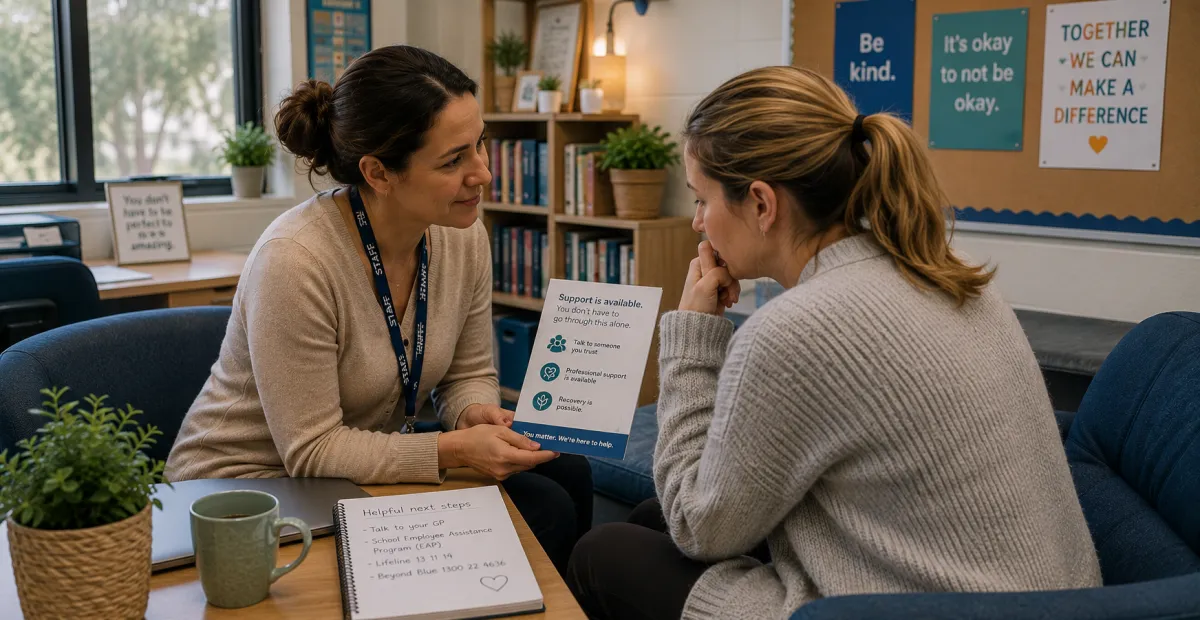
E: Encourage Appropriate Professional Help
Encourage the person to see a GP, psychologist, counsellor or their Employee Assistance Program. You are not diagnosing them. You are helping them take the next step towards someone who can.
A useful phrase is: "You don't have to figure this out alone. Would it help to talk to someone who specialises in this?"
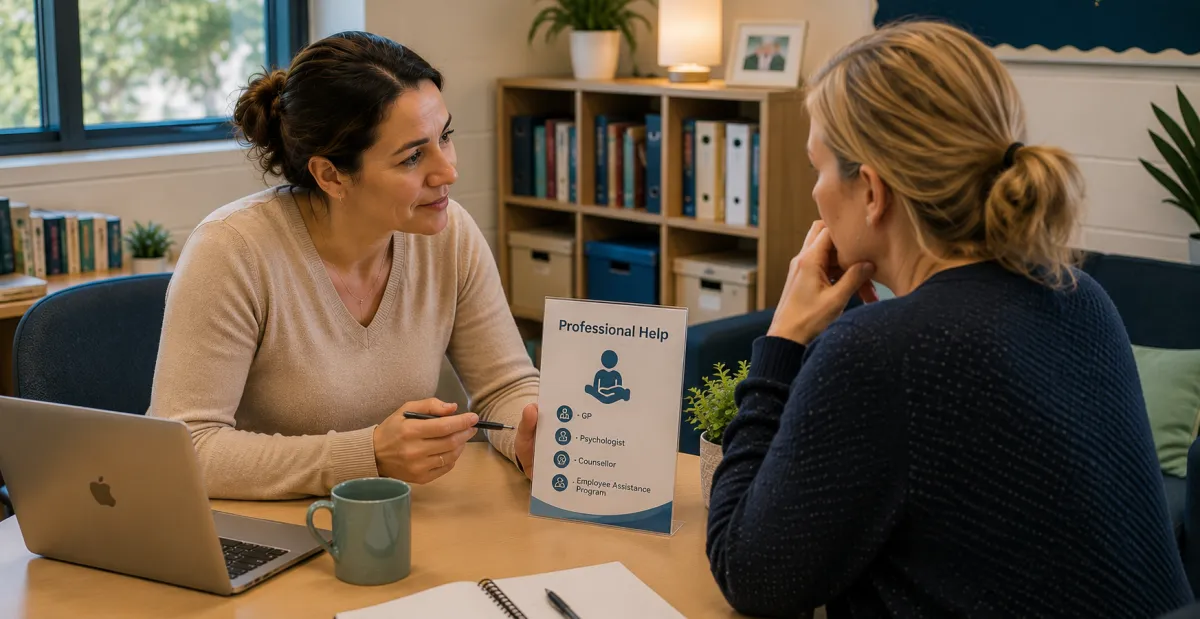
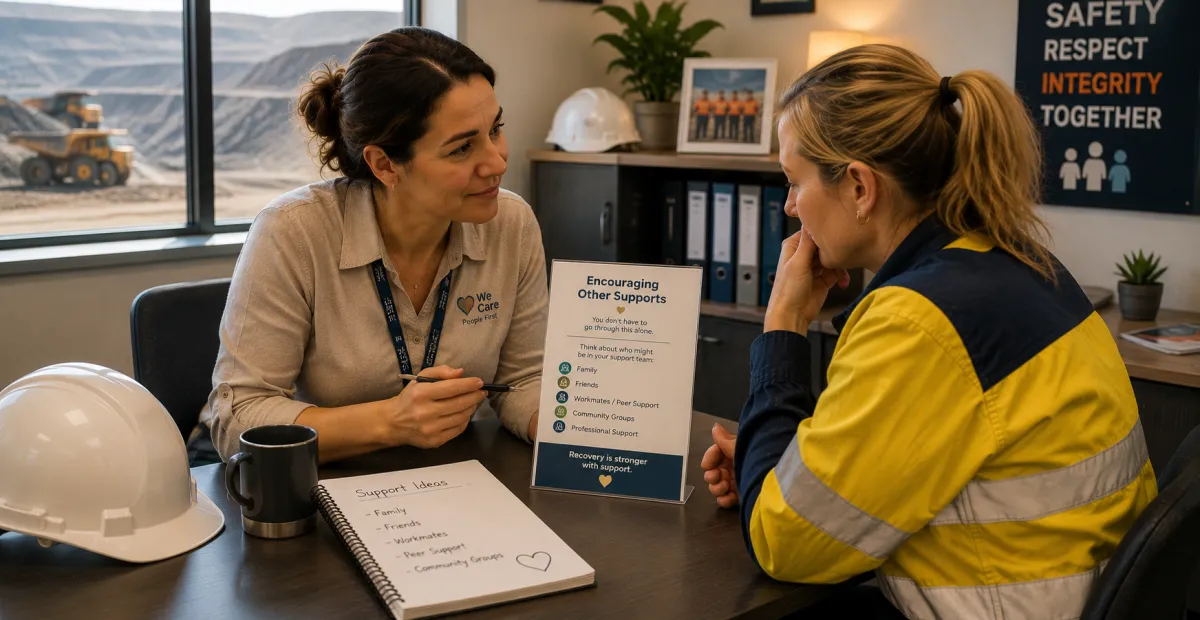
E: Encourage Other Supports
Recovery rarely happens through one conversation or one professional alone. Help the person think about who else might support them: family, friends, peer networks or community groups.
Does this approach actually work? Yes. Multiple randomised controlled trials have found that Mental Health First Aid training improves participants' knowledge, increases their confidence and willingness to help, and reduces stigmatising attitudes, with these benefits still measurable six months later (Kitchener and Jorm, 2006, journals.sagepub.com/doi/10.1080/j.1440-1614.2006.01735.x). A later systematic review and meta-analysis confirmed similar findings on knowledge, stigma and helping behaviour across a wide range of studies (PLOS ONE, journals.plos.org/plosone/article?id=10.1371/journal.pone.0197102).
Want your team trained properly, not just talked at? Amanda's accredited Mental Health First Aid Training gives your people the confidence and the skills to actually use ALGEE when it matters.
Recognising the Warning Signs
Most people who are struggling do not announce it. They show it, gradually, through change.
Changes worth noticing include:
Withdrawing from colleagues or conversations they used to enjoy
A noticeable drop in the standard or consistency of their work
Increased irritability, tearfulness or uncharacteristic outbursts
Turning up late, leaving early, or increased absenteeism
Appearing exhausted, flat or disengaged, even in usually energising situations
Increased reliance on alcohol or other substances to cope
Talking about feeling hopeless, like a burden, or like there is no way out
The most useful skill here is not diagnosis. It is noticing change from someone's normal, and caring enough to ask about it.
The work that I do allows us to safely explore your deepest fears and biggest longing, creating space and skills to build trust and expand the intimacy in your most important relationships.
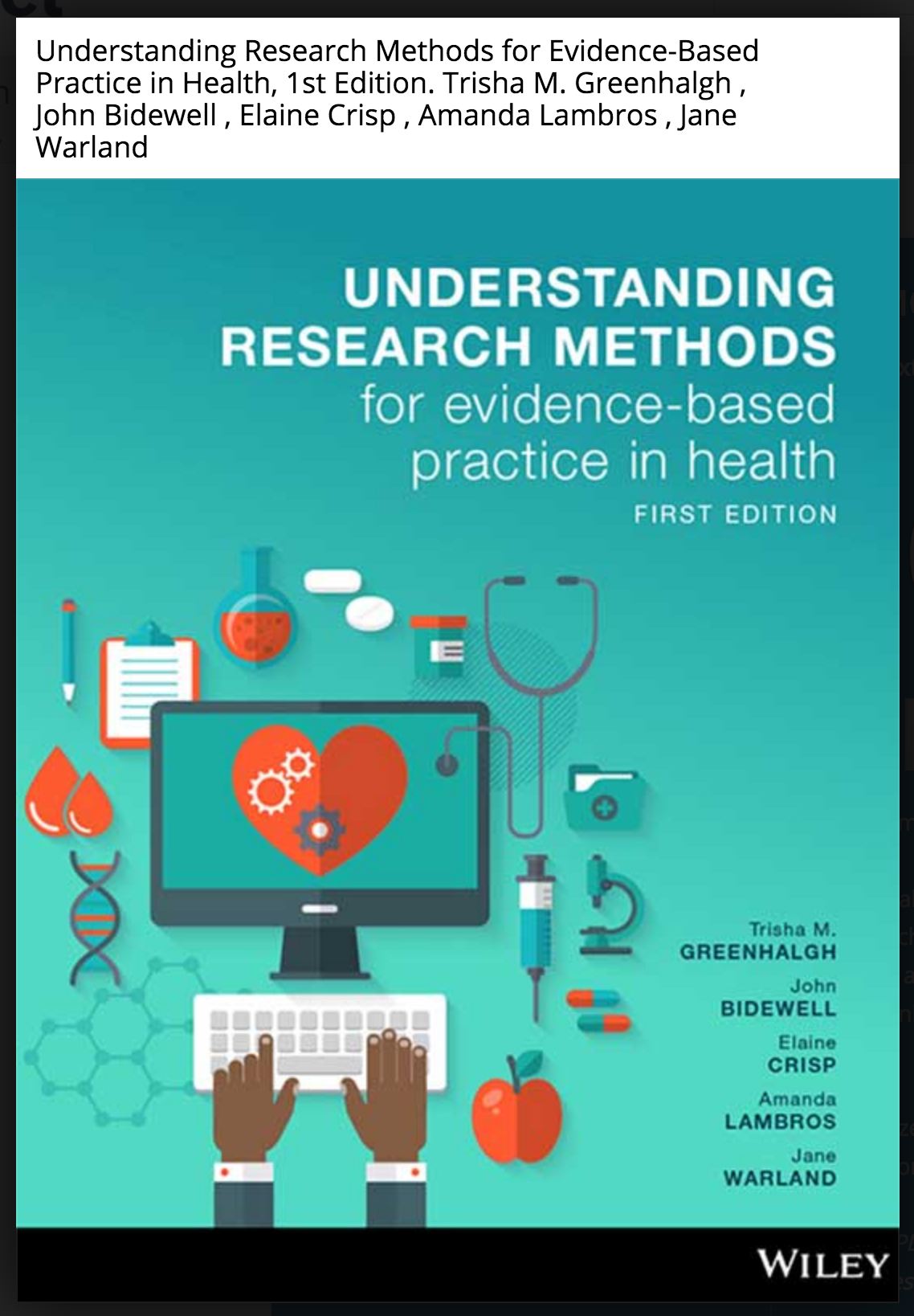
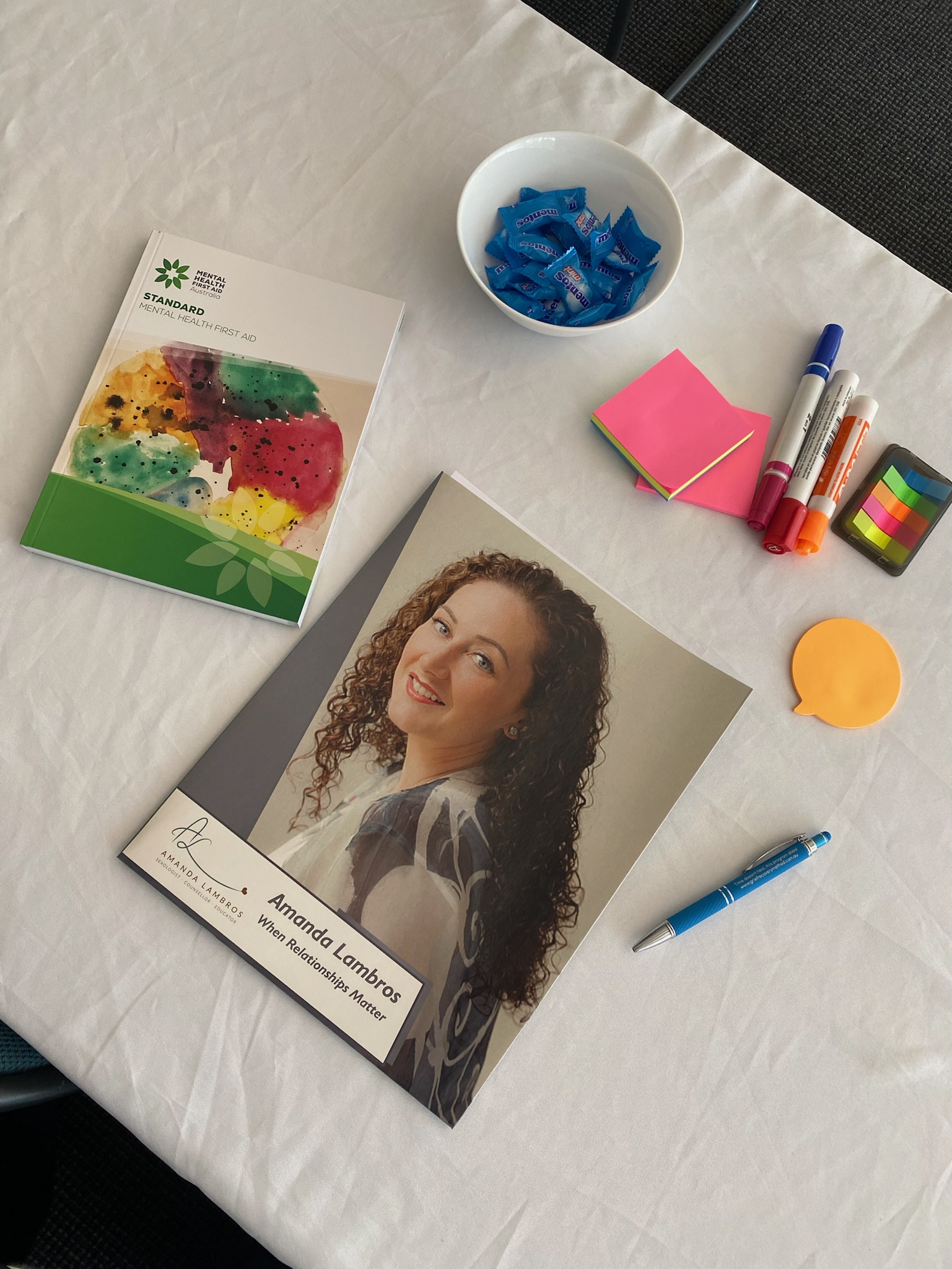
I continued with a Master of Counselling (MACouns.) and dove straight into academia as a researcher, then lecturer, then climbed the ranks as a Unit Coordinator and Program Coordinator for various academic institutions across Australia. One of my fav achievements was writing various academic textbooks...yep, I'm that level of geek!
I'm now a Counsellor & Sexologist specialising in helping people learn to communicate and create their best self and their best relationships.
I do this by helping people develop an understanding of women's issues, healthy relationships, self worth, self-care, personal growth and development, leadership development, living with and on purpose, and life stage transitions.
With more than two decades of counselling and speaking experience, I maintain an active motivational speaking schedule, presenting to groups and organisations such as Rio Tinto, The Stag Shop, Alinta Energy, the Strata Community Association as well as churches, schools and non-profits
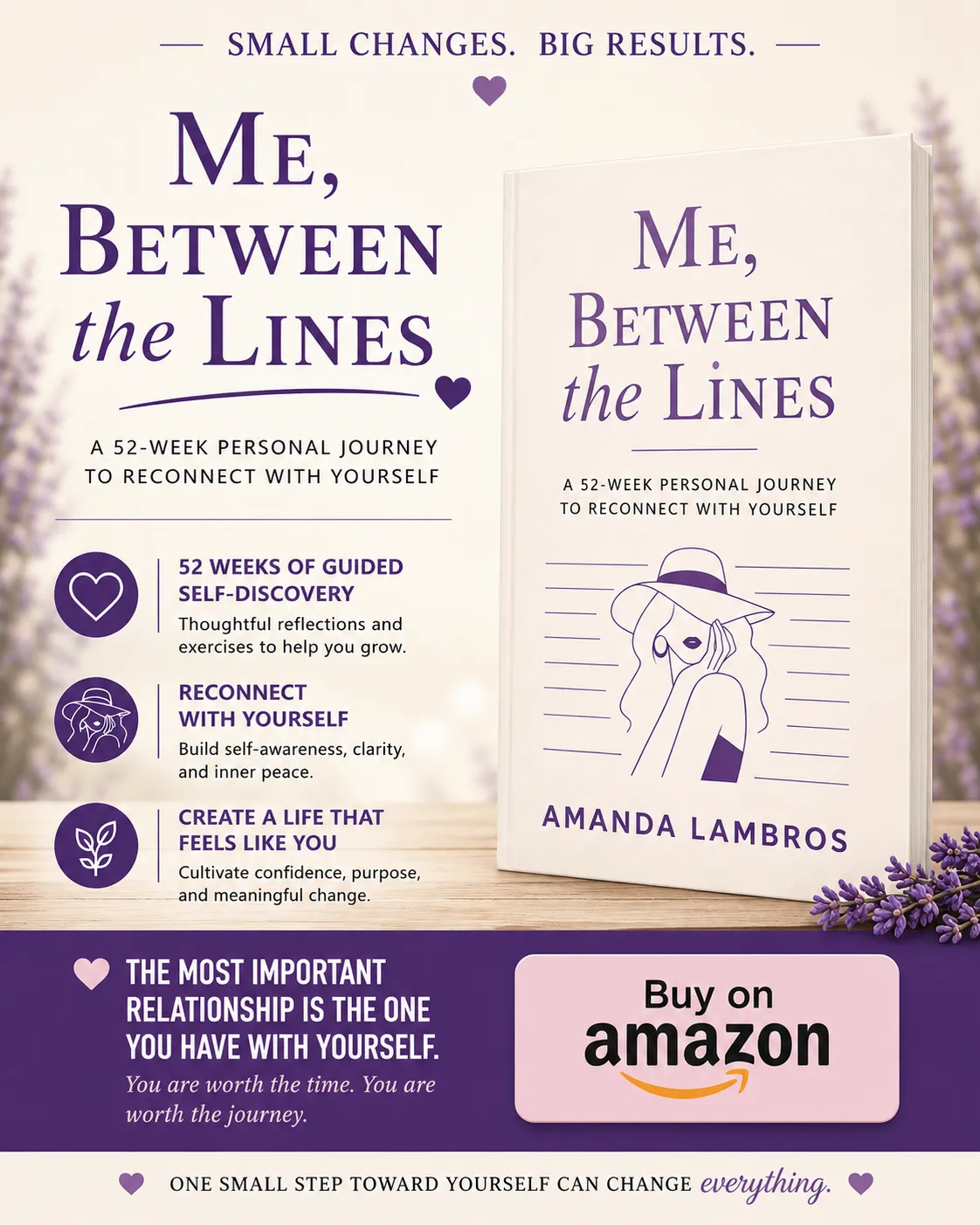
I wrote this!
Responding to a Mental Health Crisis at Work
A crisis moment, someone in acute distress, talking about self-harm, or overwhelmed beyond their ability to cope, calls for a calmer, more direct version of the same skills.
If you are supporting someone in crisis:
Stay calm. Your steadiness genuinely helps regulate theirs.
Ask directly and gently if they are thinking about harming themselves. Asking does not put the idea in their head. It opens the door to honesty.
Listen without judgement, and avoid trying to talk them out of how they feel.
Do not leave them alone if you believe they are at immediate risk.
Remove or limit access to obvious means of harm where it is safe and practical to do so.
Contact emergency services on 000 if there is immediate danger, or support them to contact a crisis line.
Follow up afterwards. A crisis conversation is the beginning of support, not the end of it.
This section is general education, not a replacement for accredited Mental Health First Aid training or professional care. If you or someone you know is struggling right now, Lifeline is available on 13 11 14, and Beyond Blue is available on 1300 22 4636. In an emergency, always call 000.
The Manager's Role Versus the Mental Health First Aider's Role
These two roles get confused constantly, and the confusion causes real problems.
A manager's role includes:
Managing performance, workload and reasonable adjustments
Following the organisation's policies and legal obligations
Referring the employee to appropriate support
Maintaining appropriate professional boundaries
A Mental Health First Aider's role includes:
Noticing signs of distress and starting a supportive conversation
Listening without judgement
Encouraging professional and personal support
Knowing their own limits, and when to step back
Neither role includes diagnosing, treating or becoming someone's therapist. A manager who is also a trained Mental Health First Aider still needs to hold both roles carefully, and know when a conversation needs to move from support to referral.
Building a Mentally Healthy Workplace
Individual skills matter, but they work best inside a workplace that is genuinely set up to support them.
Organisations building a mentally healthy workplace typically focus on:
Conducting a genuine psychosocial risk assessment, not just a compliance checklist
Training a visible network of Mental Health First Aiders across teams, not only in HR
Making the Employee Assistance Program easy to find and simple to use
Building manager capability, not just awareness
Normalising regular, low-pressure check-ins, not only formal reviews
Modelling openness from leadership, since culture follows behaviour, not policy documents
Reviewing workload, deadlines and role clarity as genuine psychosocial hazards, not just soft factors
This guide provides general information only and is not legal advice. Psychosocial hazard obligations vary by jurisdiction, so specific compliance questions are best directed to a workplace health and safety professional.
A mentally healthy workplace is not something you build once. It is something you monitor and adjust.
Useful indicators include:
Employee Assistance Program engagement, viewed as a sign of trust rather than a red flag
Absenteeism and presenteeism trends over time
Psychosocial risk survey results, tracked before and after interventions
How comfortable staff report feeling raising concerns, in genuine, anonymous feedback
Manager confidence in having supportive conversations
Time between a concern being raised and a person receiving support
None of these numbers alone tell the full story. Together, they show whether training is translating into a genuinely different day-to-day experience for your people.
You can also find free tools and worksheets to get started in the
Free Resources Hub: https://amandalambros.com/freebies
Frequently Asked Questions About Mental Health First Aid in the Workplace
What is Mental Health First Aid?
Relationship repair is the process of reconnecting after a disagreement, misunderstanding or hurtful moment. It includes acknowledging what happened, understanding its impact and taking steps to rebuild trust and closeness.
Is Mental Health First Aid the same as therapy?
No. Mental Health First Aid is about noticing, listening and connecting someone to appropriate professional support. It does not diagnose or treat mental illness.
What does ALGEE stand for?
ALGEE stands for Approach, assess and assist with any crisis; Listen non-judgementally; Give reassurance and information; Encourage appropriate professional help; and Encourage other supports.
Do the ALGEE steps need to happen in order?
No. Unlike a strict emergency procedure, the ALGEE steps can happen in any order, and several can happen in the same conversation.
Why does workplace mental health matter so much financially?
Poor mental health costs the Australian economy an estimated $220 billion a year, with workplace productivity losses alone estimated between $12.2 billion and $39.9 billion annually.
What is the return on investment for workplace mental health training?
Australia's Productivity Commission found that workplace mental health interventions return between $1.30 and $4 for every dollar invested.
How common is mental illness in the workplace?
Almost one in five Australians experience a mental illness in any given year, meaning most teams include several people affected at any given time.
Why do so many employees hide mental health struggles at work?
Research from Diversity Council Australia found more than half of workers would hide a health condition to avoid discrimination, largely due to fear of being seen as less capable or reliable.
What are psychosocial hazards?
Psychosocial hazards are workplace factors that can cause psychological harm, such as excessive workload, poor role clarity, bullying or lack of support.
Are employers legally required to manage psychosocial hazards?
In Australia, Safe Work Australia's Model Code of Practice requires employers to identify and manage psychosocial hazards with the same seriousness as physical safety hazards, though specific obligations vary by jurisdiction.
What are early warning signs someone may be struggling?
Common signs include withdrawal, a drop in work quality, irritability, increased absenteeism, exhaustion, increased substance use, or talking about feeling hopeless.
What should I say to a colleague I'm worried about?
A simple, genuine opening works well, such as "I've noticed you don't seem yourself lately. I wanted to check in."
Is it safe to ask someone directly if they are thinking about self-harm?
Yes. Asking directly and gently does not increase risk. It opens the door for an honest conversation and shows the person they are not alone.
What should I do if I believe someone is in immediate danger?
Stay with them if it is safe to do so, contact emergency services on 000, and avoid leaving them alone until further support arrives.
What is the difference between a manager's role and a Mental Health First Aider's role?
A manager focuses on performance, policy and referral. A Mental Health First Aider focuses on noticing distress, listening and encouraging support, without diagnosing or treating.
Does Mental Health First Aid training actually work?
Yes. Multiple randomised controlled trials and a systematic review have found it improves knowledge, confidence and helping behaviour, and reduces stigma, with effects still measurable six months later.
Is one training session enough to change workplace culture?
No. Training builds skills, but lasting culture change also needs visible leadership support, clear pathways for support and regular reinforcement.
What is the bystander effect in workplace mental health?
The bystander effect happens when colleagues notice someone is struggling but assume someone else, often the manager, will step in, so no one does.
How can leaders model a mentally healthy workplace?
Leaders can model openness by talking about mental health themselves, using their own leave appropriately, and responding supportively when someone raises a concern.
What should happen after an employee discloses a mental health issue?
There should be a clear, known next step, such as a supportive conversation about reasonable adjustments, information about the Employee Assistance Program, or a referral to appropriate support.
How is workplace mental health progress measured?
Useful indicators include Employee Assistance Program engagement, absenteeism trends, psychosocial risk survey results and staff comfort in raising concerns.
Can Mental Health First Aid training help with compliance obligations?
It can support a broader psychosocial risk strategy, but training alone does not fulfil every legal obligation. Organisations should seek specific work health and safety advice for compliance requirements.
What is presenteeism?
Presenteeism is when someone is physically at work but working at reduced capacity due to poor mental or physical health, and it is a significant hidden cost for many organisations.
Who should be trained in Mental Health First Aid?
Ideally, a visible network of people across all levels and departments, not only managers or HR, so support is accessible no matter who someone feels safe approaching.
Can I do more harm by trying to help and getting it wrong?
Avoiding the conversation altogether tends to cause more harm than an imperfect, caring attempt to help. Genuine care communicates itself, even without perfect words.
Where can I access Mental Health First Aid training?
Humour, used gently and not as a way to dismiss a partner's feelings, is one of the most effective and well-researched repair attempts couples can use.
You can learn more about Amanda's accredited Mental Health First Aid Training and book your workplace in through the workshops page.
Small arguments escalate quickly when emotional flooding takes over, or when old, unresolved resentment gets triggered by a new, smaller issue.
Where can someone find immediate crisis support?
Lifeline is available on 13 11 14 and Beyond Blue on 1300 22 4636. In an emergency, always call 000.
About Amanda Lambros
Amanda Lambros is a relationship counsellor, speaker and content creator who has spent more than 25 years helping people build healthier relationships, stronger self-care habits and more confident leadership.
She delivers accredited Mental Health First Aid Training for workplaces.
Learn more or book a training below

References and Further Reading
Mental Health First Aid Australia, "Exploring the MHFA Action Plan": https://www.mhfa.com.au/resources-support/articles/exploring-the-mhfa-action-plan
Mental Health First Aid Australia, "Action Plan: First Steps to Offering Support": https://www.mhfa.com.au/resources-support/articles/action-plan-first-steps-to-offering-support
Safe Work Australia, "Model Code of Practice: Managing Psychosocial Hazards at Work": https://www.safeworkaustralia.gov.au/doc/model-code-practice-managing-psychosocial-hazards-work
Productivity Commission, "Mental Health Inquiry Report" (2020): https://www.pc.gov.au/inquiries/completed/mental-health
Kitchener, B. A., & Jorm, A. F. (2006). "Mental Health First Aid Training: Review of Evaluation Studies." Australian and New Zealand Journal of Psychiatry: https://journals.sagepub.com/doi/10.1080/j.1440-1614.2006.01735.x
Systematic Review and Meta-Analysis of Mental Health First Aid Training, PLOS ONE: https://journals.plos.org/plosone/article?id=10.1371%2Fjournal.pone.0197102
Diversity Council Australia, "Addressing Workplace Mental Health": https://www.dca.org.au/news/blog/addressing-workplace-mental-health
A tiny bit more...
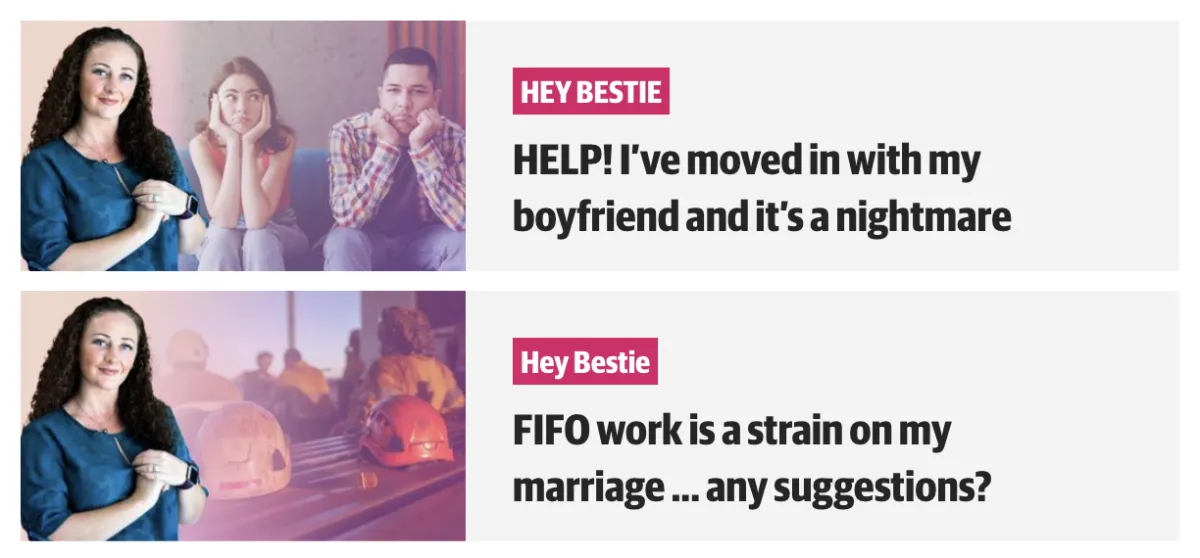
I am a Certified Speaking Professional (CSP), one of the highest designations to achieve for Speakers Globally and I am the Relationship Columnist for PerthNow.com.au
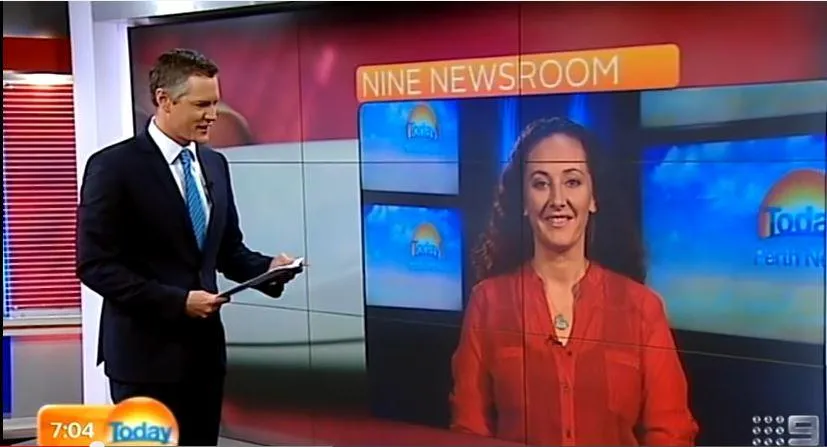
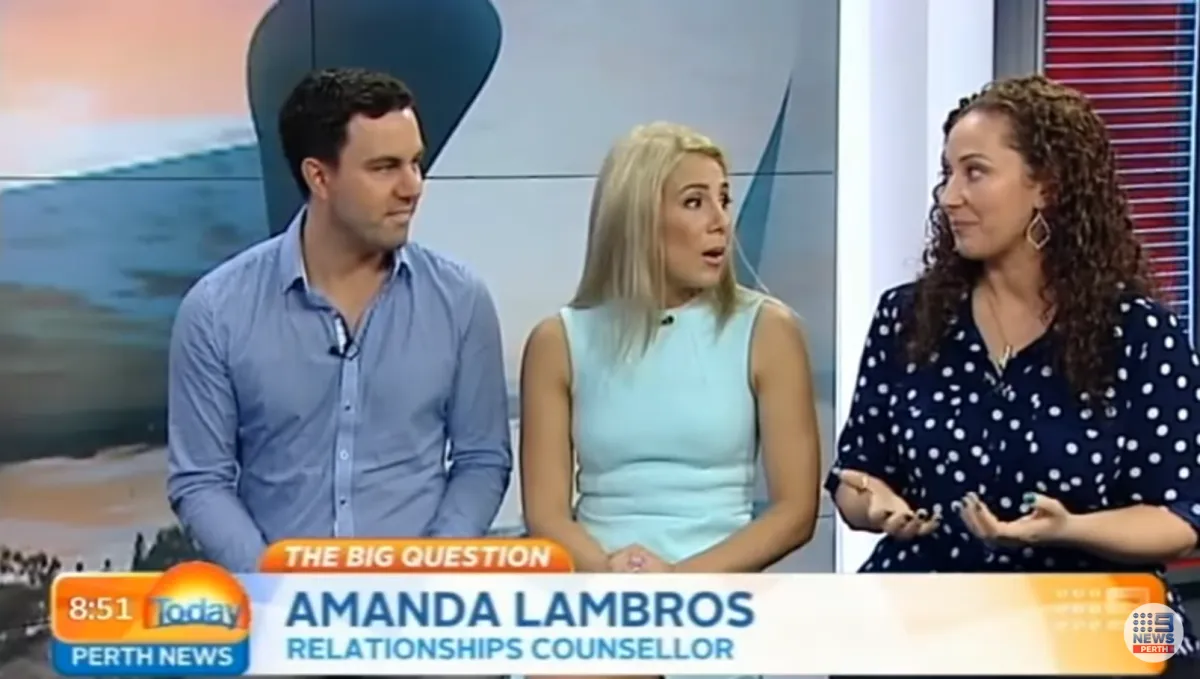
As a result of my success, I've been featured in the TV series Luke Warm Sex, interviewed on Today Show, Mornings, Sky News, ABC Radio, SBS and CBC Radio. I have also been featured in over 100 newspaper and magazines, including the Huffington Post, The Australian, The Courier News and the West Australian in the areas of Mental Health, Relationships, Sexuality, Communication and Grief and Loss.
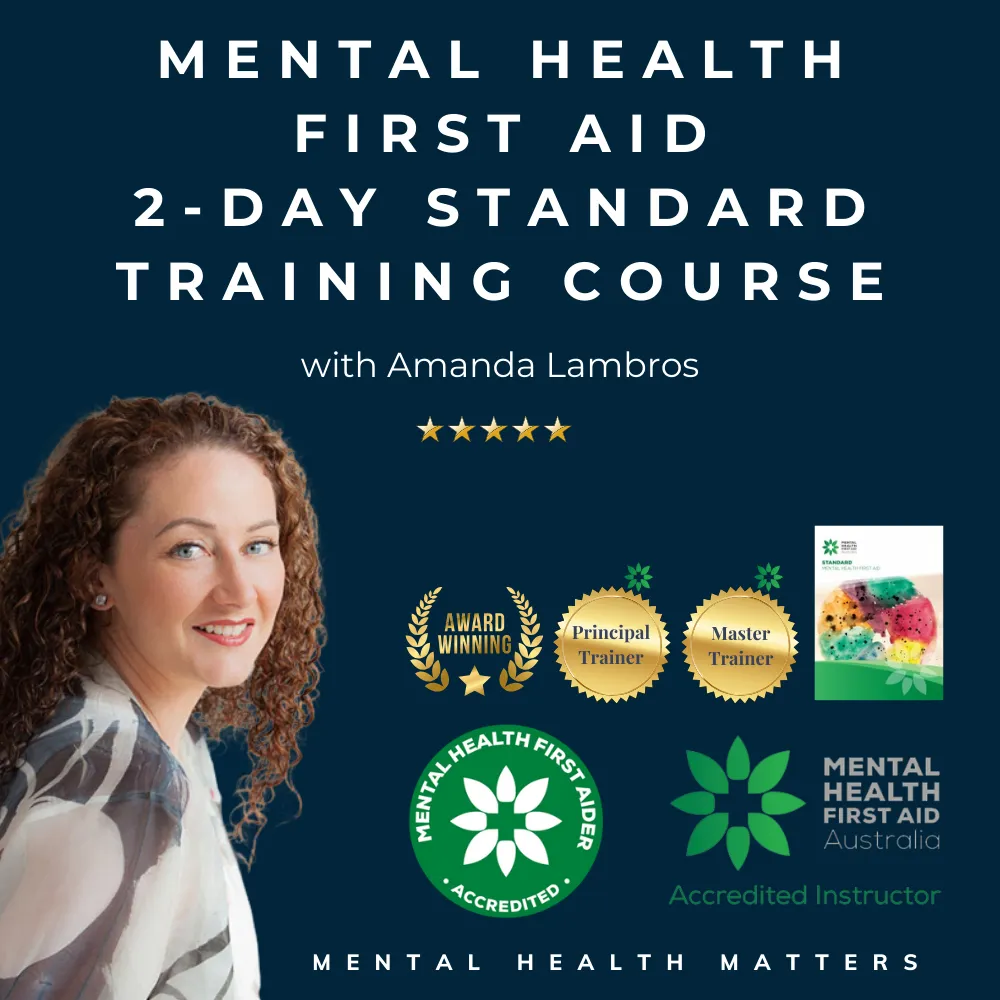
I also actively train and facilitate various program including Mental Health First Aid.
When I'm not on stage or helping couples learn to communicate, you'll find me with family and friends, my teen boys and hubby...typically eating, enjoying life and each other or watching a docuseries always with a warm cup of coffee.
If you got this far...thanks for reading...I really appreciate it. Feel free to get in touch with me directly if you have any questions or would like to work together.
Amanda x

EDUCATION, CREDENTIALS, AND CERTIFICATIONS
Bachelor of Health Sciences (UWO)
Post Graduate Diploma of Ethics (UWO)
Master of Forensic Sexology (Curtin)
Master of Counselling (UNE)
Certified Speaker Professional (CSP)
Virtual Speaking Professional
Gottman - Level 3 Facilitator
Mental Health First Aid Principle, Master Trainer
Prepare-Enrich Trainer & Facilitator
SYMBIS Facilitator
Grief Recovery Method Director & Trainer
Gottman - Bringing Baby Home Facilitator
Edu-Therapy Grief Facilitator
PROFESSIONAL MEMBERSHIPS AND ASSOCIATIONS
Marriage and Relationship Educators of
Australia Association (MAREAA) - Current PresidentProfessional Speakers Australia (Board Member)
Virtual Speakers Association (International)
American Association for Marriage and Family Therapy (AAMFT)
American Association of Sexuality Educators, Counsellors and Therapists (ASSECT)
The Australian & New Zealand Mental Health Association
Level 4 Member of ACA


LET'S CONNECT:


MENU:
LEGAL:
Copyright 2026. Amanda Lambros Consulting. All Rights Reserved.
LET'S CONNECT
MENU
LEGAL
Copyright 2026. Amanda Lambros Consulting. All Rights Reserved.